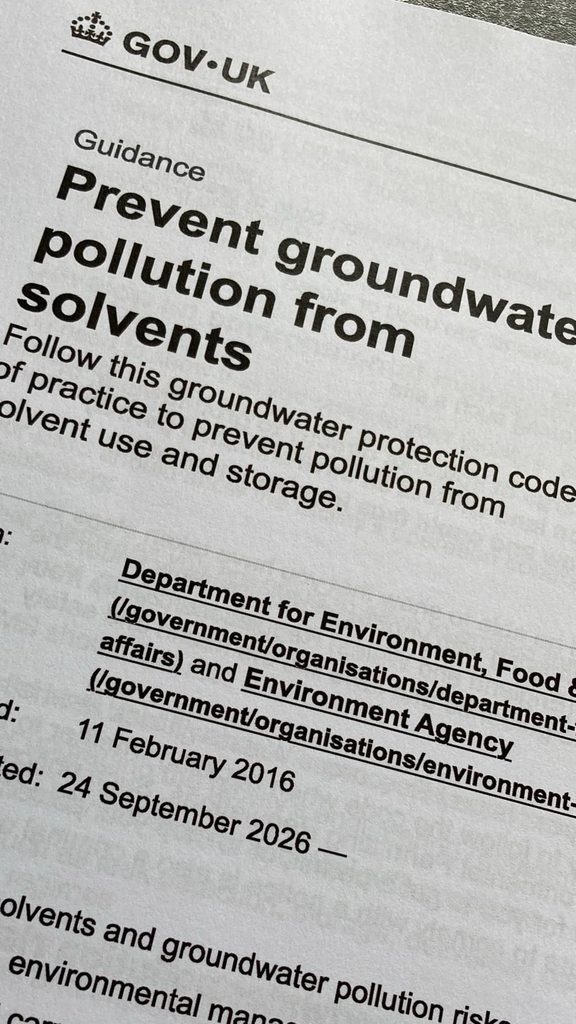
I was just looking through the updated guidelines named Prevent Groundwater Pollution (Sept 2026). It is a code of practice targeted to prevent pollution from solvent use and storage. By adhering the code of practice, we will comply with the legal requirements under the Environmental Permitting Regulations. The sites activities are regulated by the Environment Agency.
The guidelines introduce types of solvents and groundwater pollution risks, safe practices of storage to prevent harm to the environment from spills / leaks and the disposal of solvents under the directive legislation.
Specifically, a site Environmental Management System will help us to show how the operations of using and storing solvents are controlled in a manner which brings residual risks to a minimum following ALARP.
A good Management System should include a detailed Risk Assessment (posed to people and the environment ) and will display effective methods of communication to staff, including staff Training and Emergency Response procedures.
The risk assessment should also include details of pipework, secondary containment, and drains ( importantly, foul drains and surface water drains ) to prevent groundwater pollution. It is critical in site maintenance to include inspection of bunds, flooring, drainage, and pipework infrastructure. Following inspection of bunds, any repairs should be carried out immediately and records should be retained.
The questions to ask yourself are:
Are you prepared to respond to emergencies? Do you know who to contact in the event of an emergency and have you got a procedure in place? Have you got an up-to-date layout / plan of site? Do you carry out any emergency procedures or drills? Have you got the right equipment and have your staff been trained to deal with large spills?
If we get this right first time, then harm to people and the environment can be minimised.
Melissa Rose