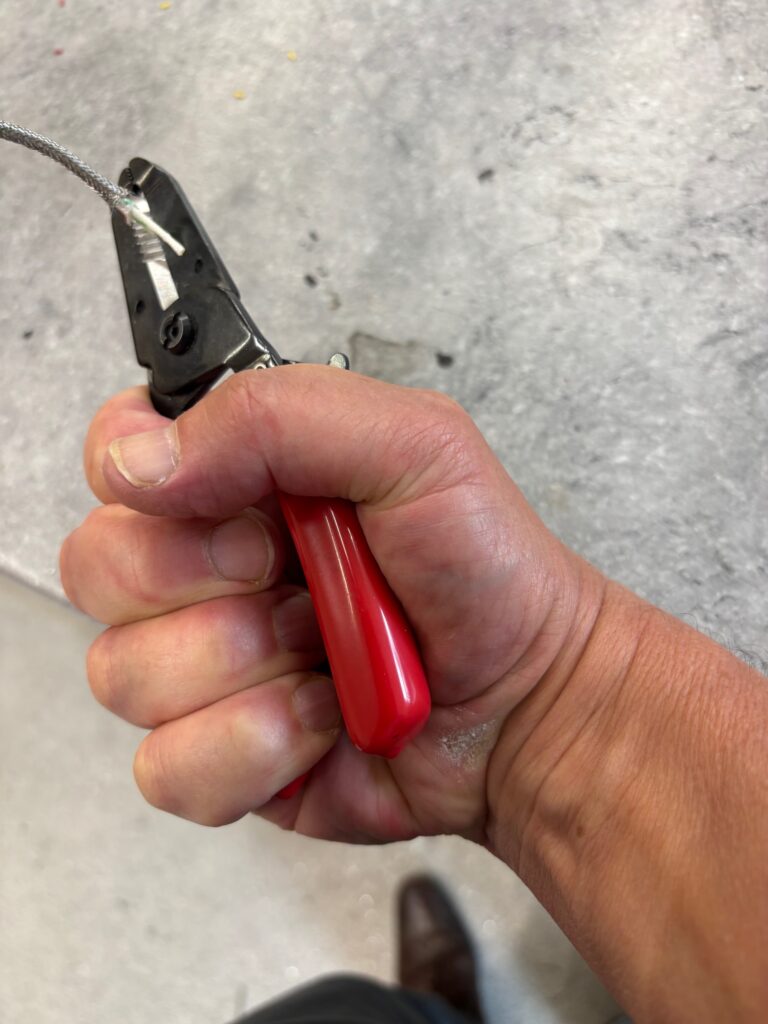
When a company specialises in bespoke manufacturing, efficiency and flexibility are everything. But custom production often comes with a hidden cost: heavy reliance on manual work. That was exactly the case for one of our recent clients—a manufacturer producing a wide range of temperature sensors, many of them built to individual customer specifications in short production runs.
Because of this highly customised approach, much of the work was carried out by hand. Operators regularly used tools such as wire cutters, wire strippers, hand pliers and hand files. While this allowed for precision and adaptability, it also raised an important concern for the client:
Could these repetitive, hand-intensive tasks be putting workers’ hands and wrists at risk?
Understanding the Risk
The client asked us to carry out a series of ergonomic risk assessments across their production areas. Our goal was to identify tasks that might contribute to fatigue, strain, or longer-term musculoskeletal problems—particularly in the hands and wrists.
We observed:
-
- High levels of repetition in fine hand movements
-
- Sustained grip force with small hand tools
-
- Limited variation in posture during long shifts
-
- Accumulation of fatigue as the day progressed
None of the tasks were extreme on their own. But repeated thousands of times per shift, day after day, they created a clear risk profile for strain-related injuries.
Practical Improvements
We worked closely with the client to develop a range of practical, low-disruption improvements, including:
-
- Introducing ergonomically designed hand tools with better grip and reduced force requirements
-
- Improving workstation layout to reduce awkward wrist angles
-
- Rotating tasks where possible to vary movement patterns
-
- Adding short micro-breaks to allow recovery during repetitive work
Each of these changes helped reduce fatigue and strain—and many also had the added benefit of improving consistency and speed of work.
The Biggest Win: Shorter Shifts
However, one finding stood out above all others.
After analysing fatigue patterns and productivity data, it became clear that the single most effective change was also the simplest:
Reducing shift length to under 8 hours.
By slightly shortening the working day, the company achieved:
-
- Lower cumulative fatigue in hands and wrists
-
- Improved concentration and accuracy later in the shift
-
- Fewer errors and rework
-
- More consistent productivity throughout the day
-
- Happier, less fatigued operators
Rather than productivity dropping, it actually improved—because people were working at a steadier, more sustainable pace.
Ergonomics That Work for Business and People
This project was a great example of how ergonomics is not just about preventing injury—it’s about designing work that people can perform well, day after day.
For this temperature sensor manufacturer, combining small equipment changes with smarter working hours delivered:
-
- Reduced risk of hand and wrist injuries
-
- Less fatigue and discomfort for operators
-
- Higher-quality output
-
- Improved overall productivity
Sometimes, the most powerful solutions aren’t complex or expensive. In this case, a simple change to shift length delivered the greatest return—for both people and performance.